
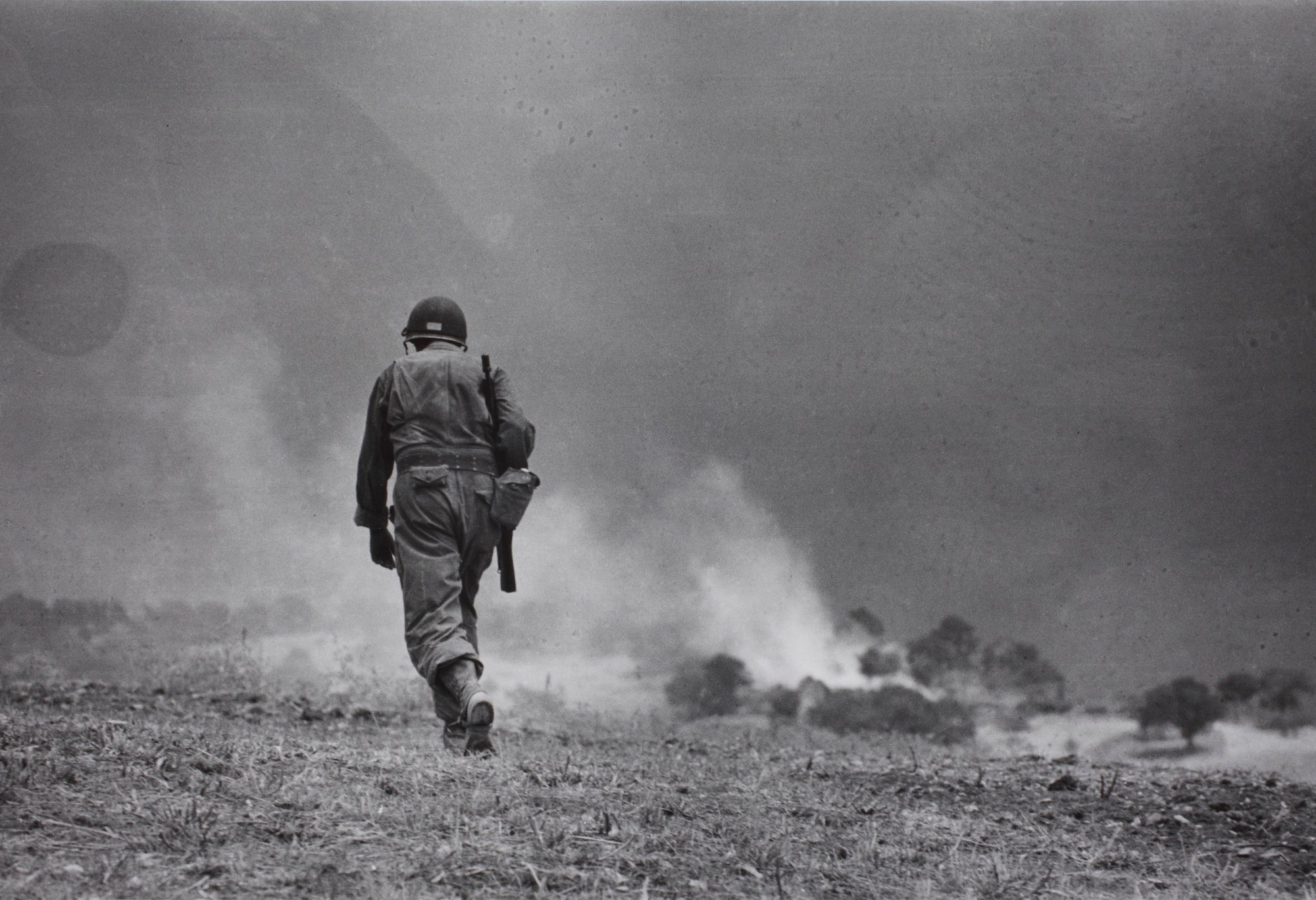
La mostra su Robert Capa a Milano, allo Spazio Oberdan fino al 25 aprile, raccoglie 78 foto del giornalista ungherese che raccontano il periodo della guerra in Italia dal 1943 al 1944.
Paracadutandosi da un aereo con gli stessi miltari, Capa arriva in Sicilia e passando per Napoli ed Anzio ci racconta attraverso le immagini i suoi 8 mesi di guerra a fianco delle truppe. Per certi aspetti fu un precursore dei reportage di guerra perchè non era diffuso che un giornalista viaggiasse con le truppe, un pionere a suo modo.
Dice Capa a proposito della battaglia di Troina, in Sicilia: “Era la prima volta che seguivo un attacco dall’inizio alla fine, fu l’occasione per scattare ottime foto. Erano immagini molto semplici. Mostravano quanto noiosa e poco spettacolare fosse in verità la guerra”.
Ed ancora: “se le tue fotografie non sono all’altezza, non eri abbastanza vicino”, ha confessato più volte.
La guerra lui l’ha raccontata spesso, vivendola, ̀ testimone dei cinque maggiori conflitti mondiali: la guerra civile spagnola, la guerra sino-giapponese, la seconda guerra mondiale, la guerra arabo-israeliana del 1948 e la prima guerra d’Indocina, in cui morirà giovane nel 1954, a soli 41 anni, calpestando una mina.
Così Ernest Hemingway, nel ricordare la scomparsa, descrive il fotografo: “Ѐ stato un buon amico e un grande e coraggiosissimo fotografo. Era talmente vivo che uno deve mettercela tutta per pensarlo morto”.
Robert Capa’s exhibition in Milan at the Spazio Oberdan is open until 25th April and concists of 78 photographs by the Hungarian journalist and were taken during the war in Italy between 1943 and 1944.
Capa landed in Sicily parachuting himself from a plane together with the troops and, passing through Naples and Anzio, illustrates through his photographs his 8 months together with the troops. In a certain way he was a forerunner to the war-reporter because at the time it was not usual for a reporter to move with the troops. He was a pioneer in his own right.
Regarding the battle of Troina in Sicily, Capa says: “It was the first time that I followed an attack from beginning to end, it gave me the possibility of taking excellent photographs. They were very simple photos. They showed how boring and not spectacular war actually was”.
And then: “if your photos are not good enough then you aren’t close enough”, he often confessed.
He often told about the war, living it, a witness to the major 5 world conflicts: the Spanish Civil War,the Sino-Japanese War, the Second World War, the Arab-Israeli War of 1948 and the first war in Indocina where he died stepping on a mine in 1954 at the age of 41.
Here is how Ernest Hemingway described the photographer after his death: “He was a good friend and a great and extremely courageous photographer. He was so alive that you really have to try hard to think of him as dead”.
ROBERT CAPA
Soldato americano in perlustrazione nei dintorni di Troina, 4-5 agosto 1943 Photograph by Robert Capa. © International Center of Photography/Magnum – Collection of the Hungarian National Museum


 Blog the fox